
- Via Baltica (TEN-T Core) is the backbone of Baltic road freight: Tallinn → Riga → Vilnius → Warsaw → Berlin → Western Europe.
- From Tartu to Berlin is approximately 1,800 km, with standard FTL transit of 2 days; Hamburg and Munich are 2–3 days.
- The Suwalki corridor (Lithuanian-Polish border) is the key chokepoint. Allow 2–4 hour delays at peak periods.
- German autobahn tolls, Belgian and French highway tolls, and fuel surcharges are often billed separately. Ask upfront.
- For vehicle transport, the FTL break-even threshold is typically 3–4 vehicles on Baltic corridors.
The three Baltic states sit at a geographic crossroads that most Western European logistics planners underestimate. They are EU members, within the Schengen zone, on the TEN-T core network, and connected to Poland and the west by modern motorway infrastructure. For companies shipping regularly between Tallinn, Riga, or Vilnius and destinations in Germany, Belgium, France, or the Netherlands, understanding the corridor options, and what actually drives your transit time and cost, is the difference between a reliable logistics budget and constant surprises.
The Main Corridor: Via Baltica (TEN-T Core)
The Via Baltica is the primary road freight artery connecting the Baltic states to Central and Western Europe: Tallinn south through Riga, Vilnius, Warsaw, and then west through Germany. It forms part of the EU's Trans-European Transport Network core corridor, which means it has benefited from consistent EU infrastructure investment. The Polish section, historically the weakest link, has improved significantly over the past decade.
For most standard cargo and vehicle transport on Baltic-to-Germany routes, Via Baltica is the default. It is the most direct road corridor, has the highest truck traffic density, meaning service infrastructure is reliable, and its routing is familiar to experienced Baltic freight drivers.
The one structural challenge is the Suwalki Gap, the section where the route crosses the Lithuanian-Polish border. At peak periods (summer, pre-Christmas), this border area can generate 2–4 hour delays for heavy freight. For time-critical shipments, build this buffer into your planning window.
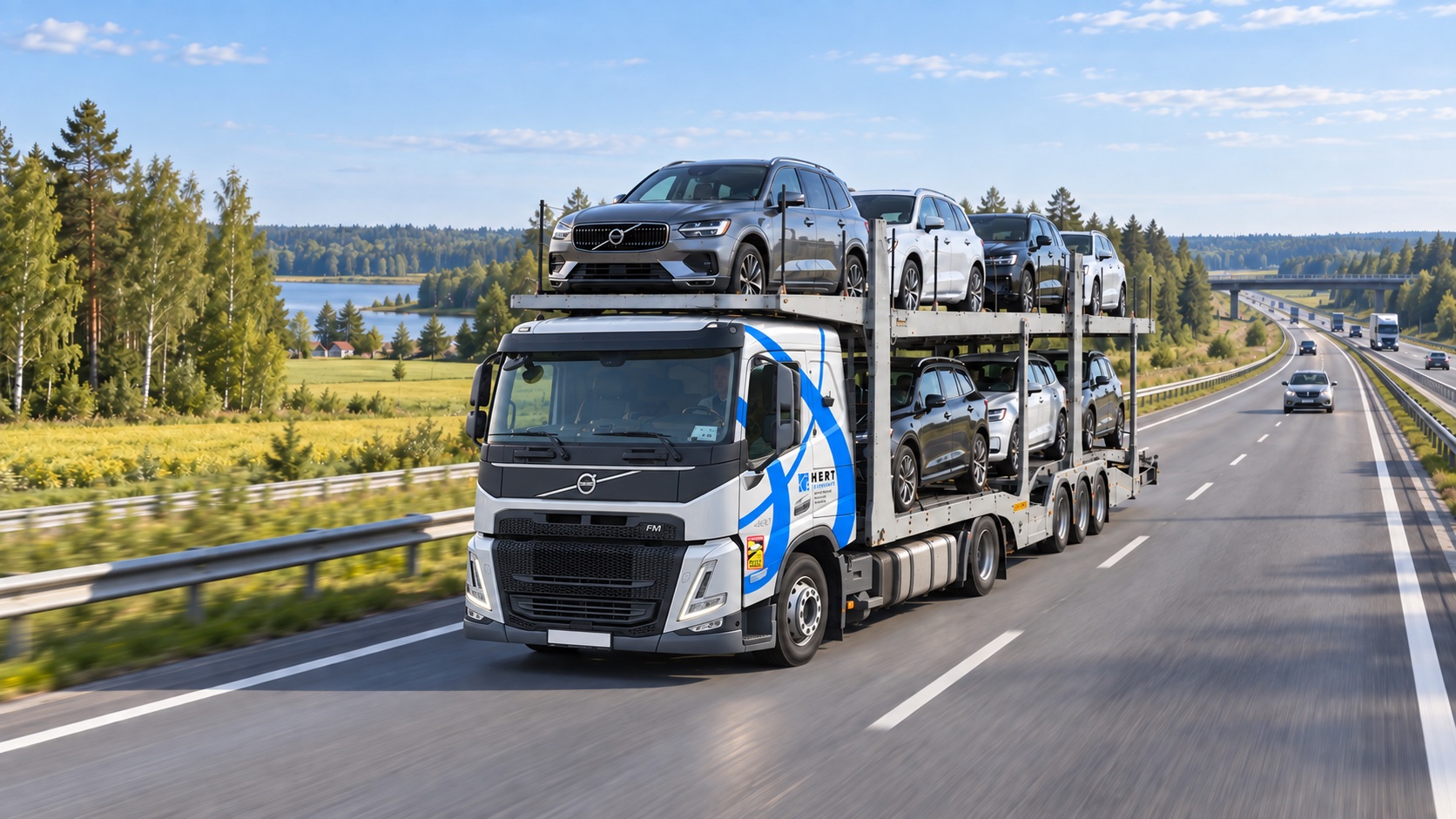
Tallinn and Tartu to Germany (DACH Region)
From Tartu, Hert's base of operations, the Via Baltica route runs south via Riga and Vilnius before entering Poland. For vehicle transport where loads are assembled from multiple Baltic collection points, this sequence is often the most efficient: collect in Estonia, add vehicles at Latvian or Lithuanian stops, and continue west on a consolidated load.
| From Tartu to | Distance (approx) | Standard Transit |
|---|---|---|
| Berlin | 1,800 km | 2 days |
| Hamburg | 2,000 km | 2–3 days |
| Frankfurt | 2,100 km | 2–3 days |
| Munich | 2,200 km | 3 days |
| Vienna | 2,100 km | 3 days |
| Antwerp | 2,400 km | 3–4 days |
| Paris | 2,800 km | 4 days |
Germany has a mandatory motorway toll system for heavy vehicles (the LKW-Maut). This cost varies by distance and emissions class. Some freight providers include toll costs in quoted rates; others invoice them separately. Ask specifically before accepting a quote.
Baltic to Benelux and France
Belgium and the Netherlands are significant automotive logistics hubs. Antwerp and Rotterdam handle large volumes of vehicle imports for European distribution. From a Baltic origin, the route to Benelux adds approximately 400–600 km to the Germany leg, with standard transit times of three to four days from Estonia.
For cargo to France, most routes go via Brussels or Frankfurt. Paris is approximately 2,800 km from Tallinn, with a four-day standard transit. Belgium and France both have heavy-vehicle toll systems, and these are real costs that should be visible in your freight quote.
Regular freight on Baltic corridors?
Hert operates scheduled weekly runs between Estonia and Germany, Belgium, and the Netherlands. Fixed departures reduce cost and give your team reliable planning windows.
Baltic to Scandinavia
Two practical options connect the Baltic states to Scandinavia. Road via Finland: a Tallinn–Helsinki ferry, then road north into Finland or west into Sweden. Or a direct RORO (roll-on/roll-off) ferry connection, Tallinn to Stockholm or Riga to Stockholm, which is often used for vehicle transport when load volumes justify the sea leg.
For car carrier transport specifically, the RORO ferry option can be more efficient at volume: a single vessel carries far more vehicles than a road transporter per trip. The trade-off is that ferry schedules add a fixed departure-dependent element to your transit window.
What Actually Affects Your Transit Time
- Cargo type. Vehicle transport has constraints that palletised freight does not, including height restrictions on certain routes, RORO terminal check-in windows, and the need to avoid roads with low bridge clearances.
- Season. August is the slowest month in Western European manufacturing. December Christmas shutdowns in Germany and France can add three to five days to standard lead times.
- Driver hours. EU regulations require a 45-hour weekly rest after six days of driving. For shipments spanning Thursday or Friday, this rest period may fall inside your transit window, adding a day. This is scheduled compliance, not a delay.
- Groupage vs. FTL. Consolidated loads add one to three days compared to a dedicated FTL, because the vehicle waits for the load to be completed before departure. For vehicle transport, the FTL break-even is typically three to four vehicles on Baltic corridors.
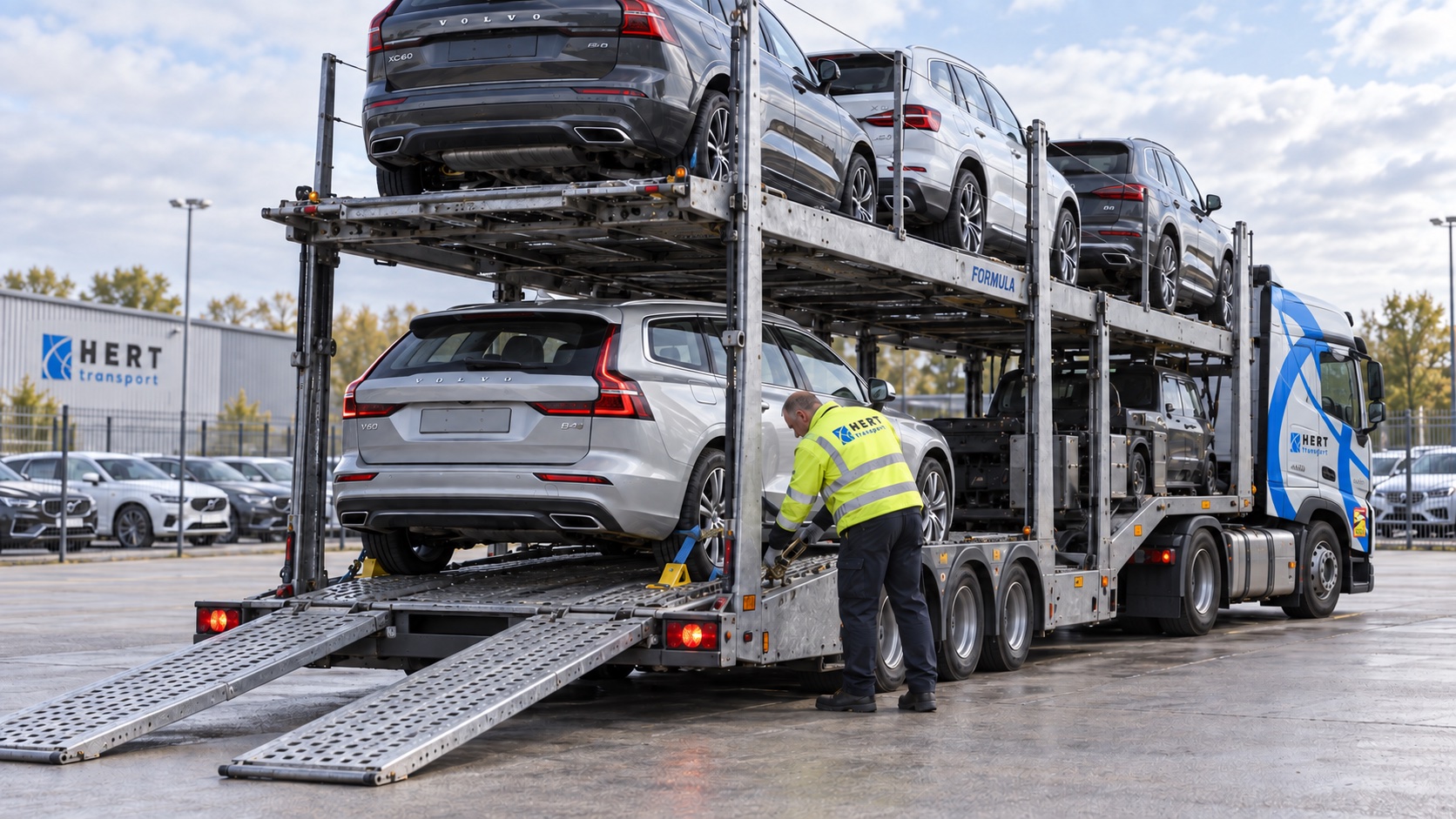
Hert operates fixed-schedule weekly runs between the Baltic states and Germany, Belgium, and the Netherlands. For companies with recurring freight or vehicle movements, a scheduled slot is more cost-efficient than booking ad hoc and gives your operations team a reliable planning window.
Cost Factors Worth Asking About
- Fuel surcharges. These fluctuate with wholesale diesel prices and are typically quoted as a percentage of the base freight rate. Confirm whether the quoted surcharge is locked or floating at time of shipment.
- Road tolls. Germany, Belgium, France, and Austria all impose heavy vehicle tolls. Some providers include these in the quoted rate; others invoice separately. The difference can be 8–12% of total cost on a Berlin-to-Paris route.
- Groupage handling fees. If your shipment consolidates with other cargo, depot handling charges at the consolidation point may not be visible in the initial quote.
- Door-to-door vs. depot pricing. The cheapest quote is often depot-to-depot, meaning you deliver the vehicle to a loading depot and collect from a destination depot. Door-to-door pricing is higher but simplifies your logistics chain.
For companies with consistent freight or vehicle movements on any of these corridors, establishing a recurring schedule with a single pan-European partner eliminates most of the cost variability described above. Contact Hert to discuss your specific route requirements.